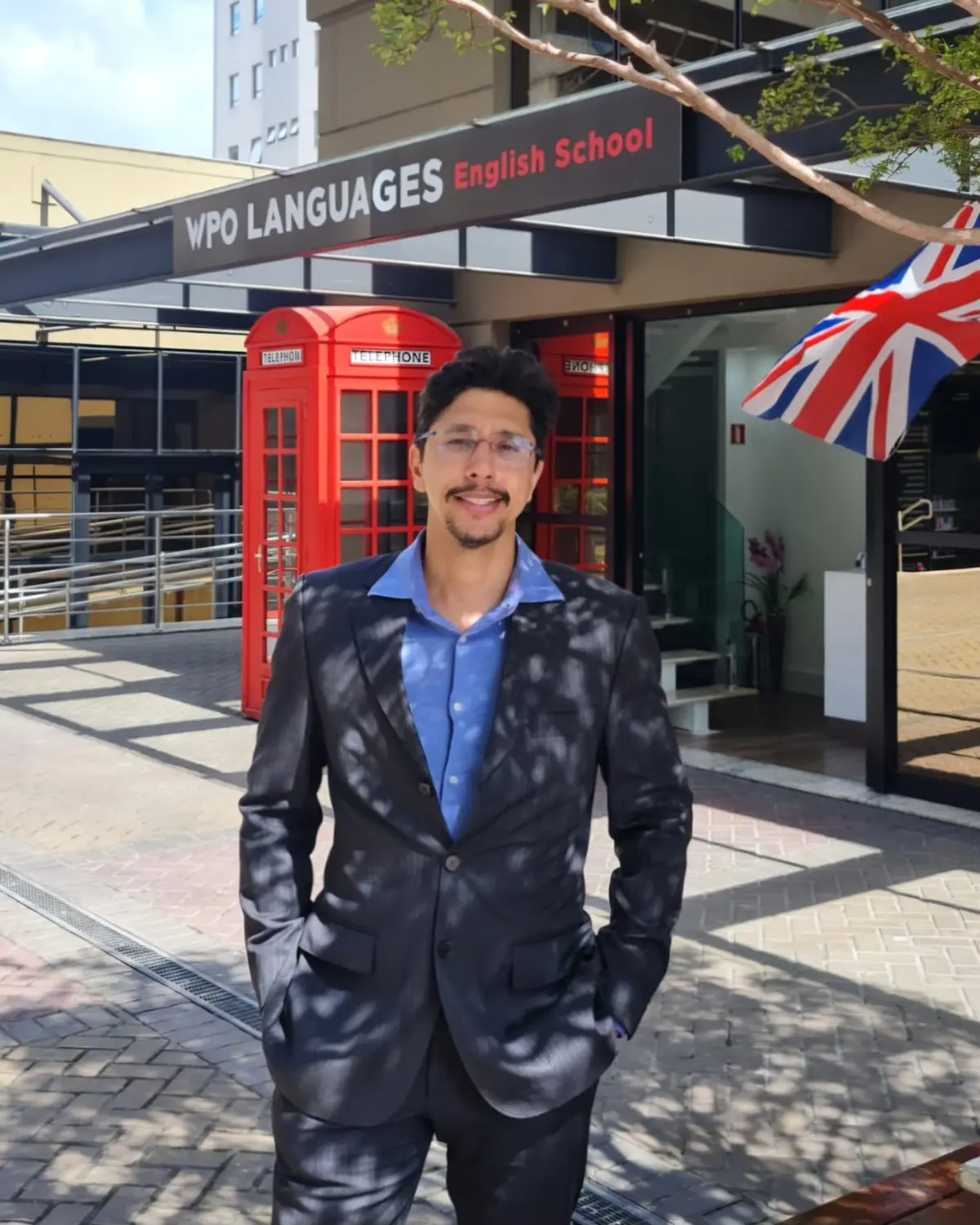
Many people, when faced with the first difficulties, end up thinking phrases such as: "English is not for me", "I was not born for this" or "I will never be able to speak".
But it is important to understand that the problem is never the student. The real obstacle lies, most of the time, in the teaching methodology applied. When the learning process does not follow the natural logic of language acquisition, the student feels stuck, frustrated and with the false impression that they do not have the capacity.
A great part of the frustrations comes precisely from the educational market's deficiency in using the right tools. Many schools still insist on traditional, rigid methods that demand exhaustive study outside the classroom, endless vocabulary lists and memorized rules — ignoring how people actually learn to communicate.
In addition, great neuroscience scholars have been pointing out for years that many traditional teaching methods fail by ignoring fundamental principles of human learning, such as contextualized repetition, progressive exposure, focused attention and the use of meaningful experiences. These specialists advocate approaches that follow the natural flow of language acquisition, corroborating exactly what WPO applies in its method.
This is where WPO stands out. Through the method developed by its founder, Teacher Waldir, the methodology follows a structured, natural and progressive learning process, respecting the way the brain actually learns a new language. The differential is that the student does not need extracurricular study to progress — they learn because they follow a process that works, reduces pressure, eliminates blocks and makes English accessible and possible.
In the end, the phrase "English is not for me" is just a consequence of methods that did not work in the past — not a truth about the student. When the methodology is applied correctly, when the process is respected and when the right tools are used, anyone can learn. At WPO, the path stops being heavy and becomes clear, structured and motivating.
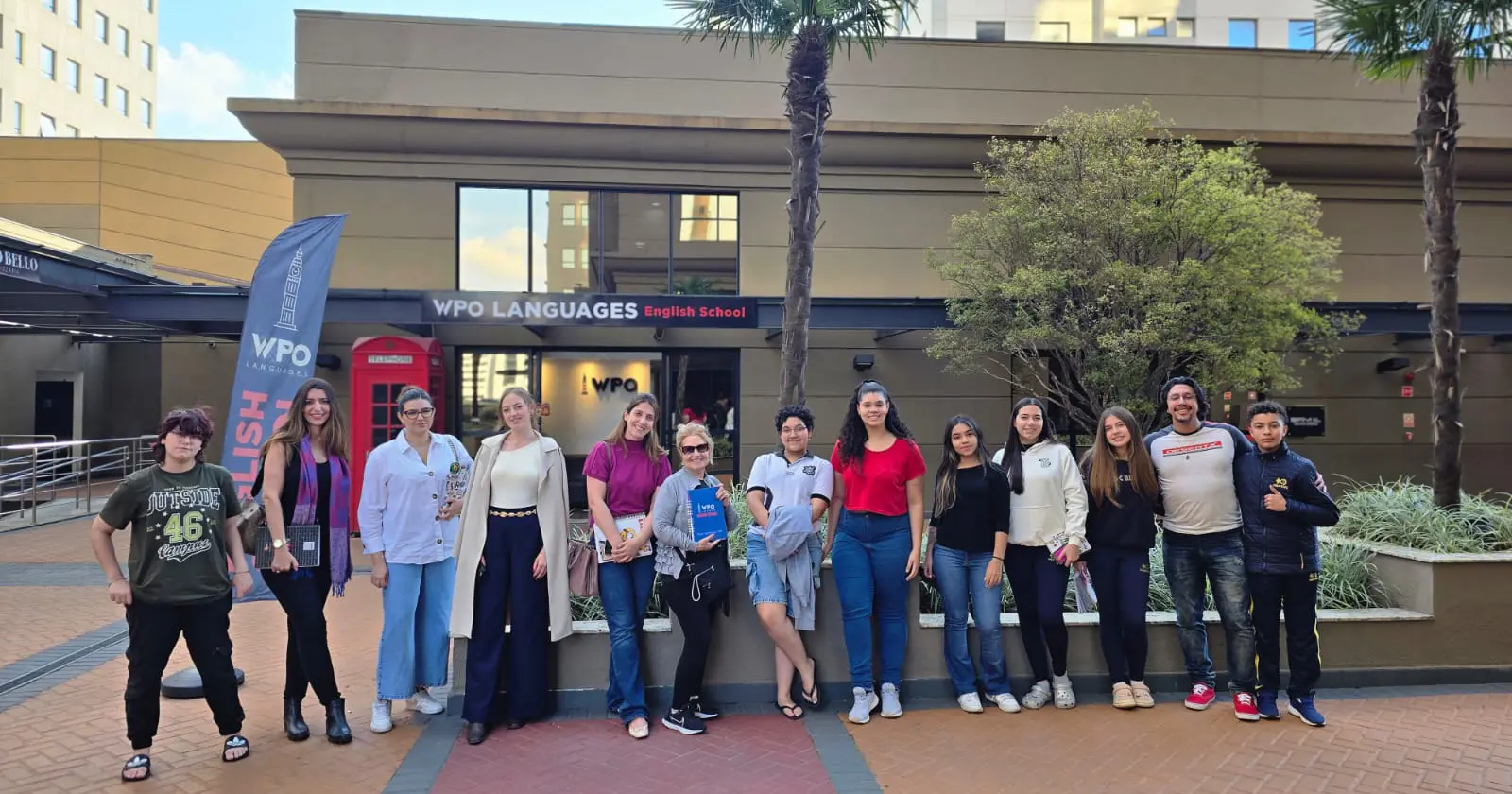
When the "impossible" became methodology: 25 years breaking barriers
A 12-year-old boy saw what no one else could see
It all started the way it begins for thousands of Brazilian children: Waldir, at age 8, was enrolled at Fisk to learn English. He was just another student sitting at the desk, opening the book and repeating words.
But during those four years — from 8 to 12 — something curious began to happen. When classmates did not understand something and asked for help, he explained. And he explained in a different way, one that worked.
Suddenly, what seemed impossible became simple. His teacher, who was the owner of the school (Uberto Arena), noticed. There was something different about that boy.
Thus, at age 12, he received an invitation: to be an assistant in the school's lab, where the homework was done.
Picture the scene — 1982: a lab full of cassette tapes. Several people in the room, headphones on, trying to decipher words that sounded like Greek. Impatient teenagers. Adults exhausted after a day's work. All there with the same dream: to speak English. And the same feeling: that they would never make it. And there was Waldir, at 12 years old, helping everyone get to the end of their lessons.
Shortly after, at 13, a new invitation: to teach a mixed class of 12 teenagers and adults — a pilot project. He accepted. And it worked.
When curiosity became a mission
After several training sessions at the Fisk headquarters, Waldir grew curious: what about the other schools? How did their teaching methods work?
He decided to seek new knowledge, teaching at institutions such as Berlitz, Cultura Inglesa, Cel.Lep, Pink and Blue Freedom, Yázigi, Wizard… he dove into each methodology like a true investigator.
One discovery left him unsettled: each school had its brilliance, but none managed to graduate every student. There were always many who got left behind.
There had to be a better way.
The day that changed the rules of the game
At 20, already graduated, a new challenge arose: teaching English to executives at Café do Ponto. On the first day, he arrived prepared with his methodology and homework — until he heard the phrase that would change everything:
"Waldir, I want to learn. But I do not have time for homework. If it depends on that, it is not going to work." — Mr. José Antonio Bassi, HR director
How to teach without homework? Every method depended on it!
It was then that, while studying Letters, he deconstructed everything he thought he knew.
What if the time in the classroom were so intense that the brain kept processing afterwards?
Then came the revelation: the problem was never the people. It was always the teaching method, the lack of a defined and followed process.
He tested. Adjusted. Listened to the students.
And it worked. WPO Languages was born right there.
Executives from various multinationals — such as Anion Química, Mexichem, Sascar, Dotz, HP, C&A — began to seek out WPO.
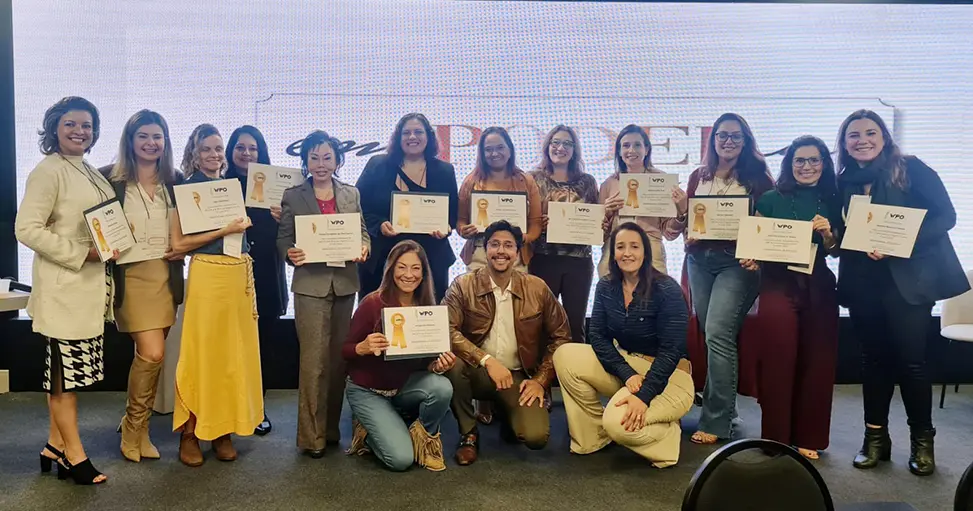
Spreading the knowledge
In 2010, the physical school WPO Languages was born with units in Alphaville and Carapicuíba, serving children from age 7, teenagers and adults — all discovering that that "seven-headed monster" was just a door waiting to be opened.
In 2018, Shirley — until then a student and pharmaceutical industrial manager — joined to help with management and became a partner. The best partnerships start when someone sees the value of what you do.
The pandemic arrived in 2020. But WPO, already strengthened, did not just survive: it grew, opening new units in Osasco and Granja Viana.
The key to it all
A well-structured method, applied correctly, makes the student fluent in any language, with no need for extra study loads outside the classroom.
An effective method needs to understand how the brain learns and depends on a learning process being respected.
Now it is your turn — Networking with the world
In 2025, Alfredo Tanimoto comes up with a transformative proposal:
"Let's create BNI Mundi in English."
BNI already connects thousands of entrepreneurs in Brazil. Now imagine that network multiplied across the entire world — you networking with London, closing a partnership with Sydney, learning with Vancouver.
The business world opens up. However, there is a detail that separates those who seize it from those who just watch:
you have to speak English.
And that is where the story of the 12-year-old boy in the lab meets your future.
The world that is waiting for you
Imagine: you in a BNI Mundi meeting. On the screen, entrepreneurs from five continents.
Someone from Toronto commenting on an opportunity.
An entrepreneur from Dublin sharing strategies.
A businesswoman from Melbourne looking for exactly your service.
And you understanding everything. Participating. Closing deals.
How many brilliant Brazilian entrepreneurs are limited to the domestic market because of the language? How many international opportunities slip away because "it has to be in English"?
This barrier does not need to exist. Not for you.
The choice that will define your next chapter
A year from now, you will be in one of two places:
1. Thinking: "I wish I were there."
And looking back and saying: "Why did I leave this for so late?"
2. Being there — understanding, participating, closing deals.
Which do you choose?
BNI Mundi is coming. Opportunity is knocking at the door.
The world is opening up.
The question is:
do you let your beliefs choose your future?
Or your ambitions?
Because 25 years have proven, without a doubt: there is no wrong age.
There is no "not for me".
There is only the decision to start.
If those executives made it…
If that person who tried three times made it…
If the one who swore to be bad at languages made it…
Why wouldn't you?
Now all that is left is for you to get to know us.
WPO is here.