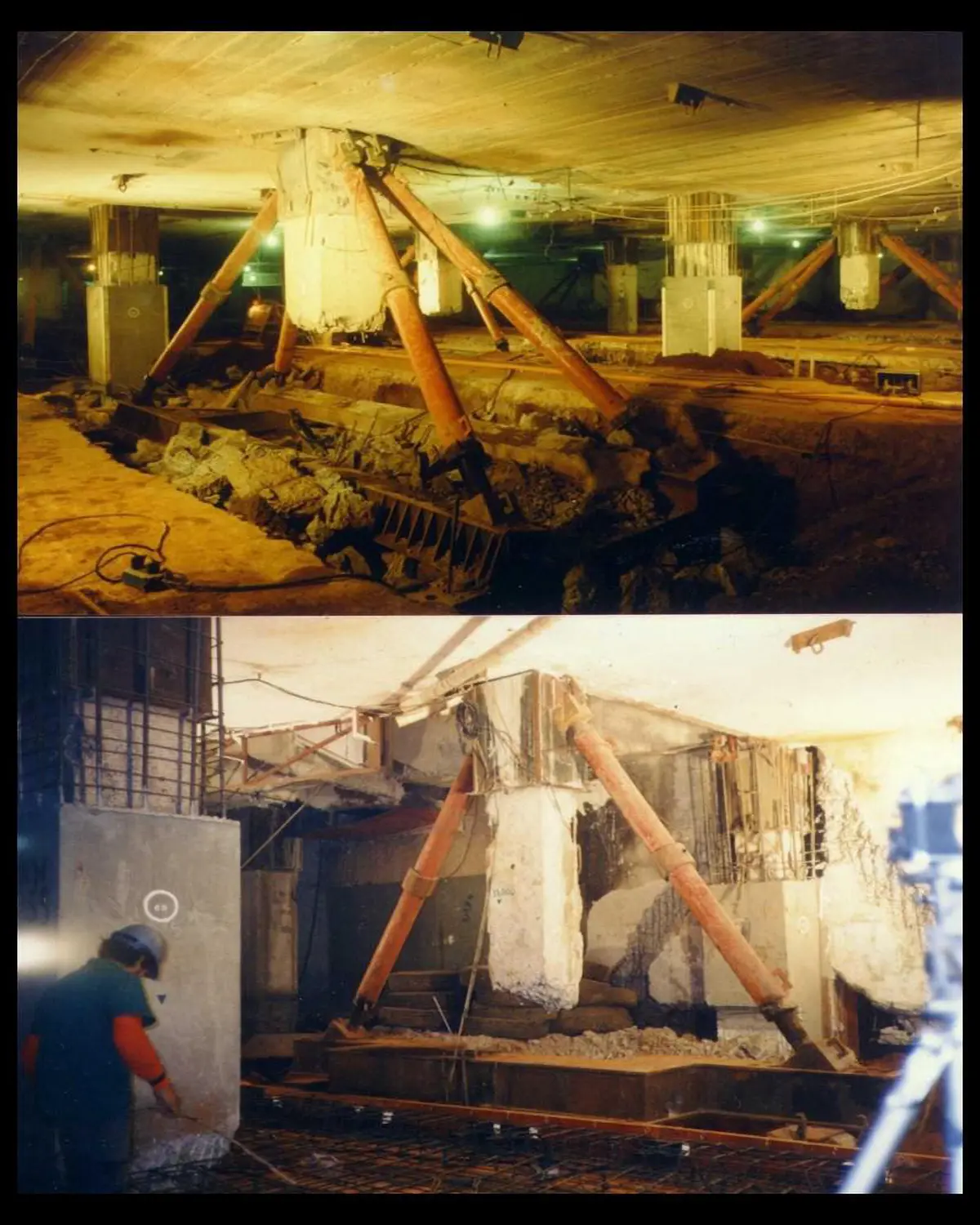
The answer is almost always hidden behind the walls, inside the slabs, in the invisible foundations: it is in structural engineering. And when we talk about truly differentiated projects, we are not just talking about bigger numbers or taller structures. We are talking about creative solutions to unique problems, about technical limits transformed into architectural possibilities.
Eng. Paulo Feitosa knows this territory well. With 72 years of family history in structural engineering — Escritório Técnico Feitosa e Cruz was founded by his father in 1953, and Eng. Paulo Feitosa has been practicing for 43 years — he has accumulated a total of 5,000,000 m2 across 2,500 projects spanning every segment.
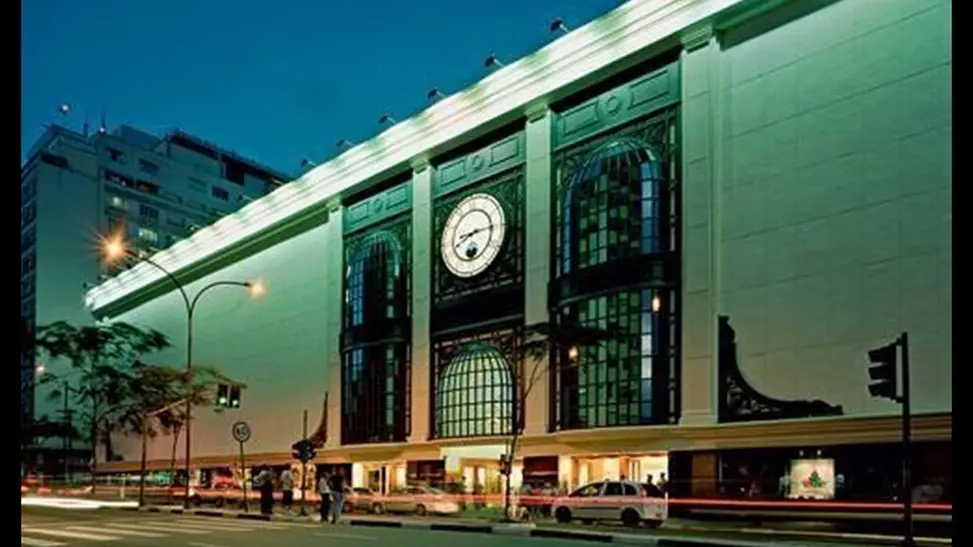
Building from within: the mall that kept growing without stopping
Imagine the following scenario: you need to transform a ground-floor store into a seven-story building. Sounds simple? Now add these restrictions: the store cannot stop operating, you must preserve the original architectural features (because current zoning laws would make the same built area unfeasible), and half of the new floors will be underground.
That was exactly the challenge of Shopping Center Paulista, in São Paulo — a project Eng. Feitosa defines as the greatest technical challenge of his firm.
"It wasn't a traditional renovation. It was high-precision surgery on a living organism," he explains. "We had to excavate three stories down and later build three stories up, while people kept moving normally through the stores. The structural work happened at night, in extremely tight time windows."
The structural complexity was fascinating: deep excavations requiring special retaining systems, reinforcement of existing columns to support new loads that hadn't been foreseen in the original project, transfer beams to redistribute forces, and all of this executed in phases so as not to compromise the overall stability.
Every stage was a new problem to solve. How do you shore up the existing structure during excavation? How do you ensure that the original foundations will support the new upper floors? All of that with structural reinforcement.
The column that couldn't exist
Another episode in the same mall perfectly illustrates how differentiated structural projects often arise from architectural or commercial demands that seem impossible.
A major fashion brand that occupied a large space in the mall had a problem: right in the middle of the store there was a structural column. To create the fluid, modern environment they wanted, the request was categorical: eliminate the column.
Structurally, the classic solution is a transfer beam — a large beam that would "catch" the load coming down through the column being eliminated and redistribute it to the adjacent columns. The project was meticulously developed: load calculations, beam sizing, reinforcement detailing, shoring specifications during execution.
But then came the surprise. During a site visit, Eng. Feitosa found the column already eliminated — without the transfer beam having been built.
"It was one of the most tense moments of my career," he recalls. "There was a structure under real risk. What should have been supported by an engineered beam was simply… in the air."
What could have been a tragedy turned into an accident avoided by pure chance: the commercial decision to divide that floor into smaller areas with masonry walls inadvertently functioned as emergency support, preventing collapse.
That story left a deep mark. "I learned that in differentiated structural projects, on-site supervision is as important as the calculation itself. The most brilliant structural solution is worth nothing if it isn't executed correctly."
The new building inside the old facade
Another kind of project that demands extreme structural creativity is interventions in historic buildings or those with facade preservation restrictions. Escritório Feitosa e Cruz has had several experiences in this field, including the project for the new headquarters of BM&F (Bolsa de Mercadorias e Futuros) in São Paulo.
In that case, the historic facade of the building had to be preserved, but the interior was completely rebuilt to meet new functional demands — including a large trading floor with a 28-meter free span.
The structural solution involved practically building a new building inside the "shell" of the old one. Large steel beams, special connections to avoid overloading the historic walls, foundations reinforced to support loads far greater than the originals.
"These projects require a different kind of sensitivity," observes Eng. Feitosa. "You're in dialogue with the existing structure, you need to understand its limitations, respect its age, but at the same time create something completely new. It is almost like organ transplant surgery."
When space demands creativity
Shopping mall projects, in general, bring unique structural challenges. The demand for large free spans (to create flexibility in store layouts), the need for underground parking (sometimes with multiple levels), the concentrated loads of escalators and elevators — all of this creates a complex structural puzzle.
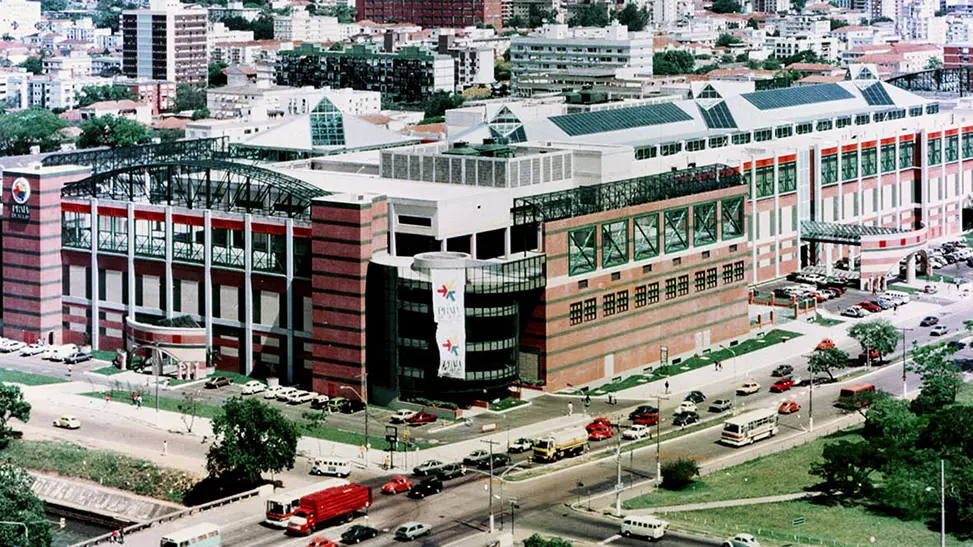
Escritório Feitosa e Cruz took part in the structural development of several large-scale shopping malls: Shopping Praia de Belas in Porto Alegre (140,000 m²), Shopping Market Place in São Paulo (130,000 m²), Shopping Jardim Sul (110,000 m²), Shopping Center Paulista (95,000 m²), among others.
Each of these projects had its own particularities. Some required overcoming especially large spans, others had to deal with problematic soils, some had height restrictions or neighborhood constraints.
"The interesting thing about shopping mall projects is that two identical solutions rarely exist," comments Eng. Feitosa.
"Even when you're designing a development of the same size, on another lot, with the same architect, the specific conditions of the structural project always bring some new challenge."
The era of tall buildings
Another fertile field for differentiated structural projects are large-scale corporate buildings. The firm developed projects such as Edifício Villa Lobos (52,000 m²), L'Arche (48,000 m²), Parque Cultural Paulista (30,000 m²), Brasilinvest (30,000 m²) and others.
In these cases, the challenges include: wind action (which in tall buildings can be a determining factor for the structural project), movement of people and equipment (high-speed elevators generate vibrations that must be controlled), deep foundations (often reaching tens of meters in depth).
A particularly important aspect is the work of coordination with other systems. In a modern building, the structure has to "coexist" with air-conditioning, electrical, plumbing, automation, and fire-fighting systems. The beams need to have openings in the right places, the columns cannot be where cars need to pass.
"Differentiated projects require a level of coordination that goes far beyond pure structural calculation," explains Eng. Feitosa. "It is almost like choreography in three dimensions, where each system has its space, its function, and everything needs to work in harmony."
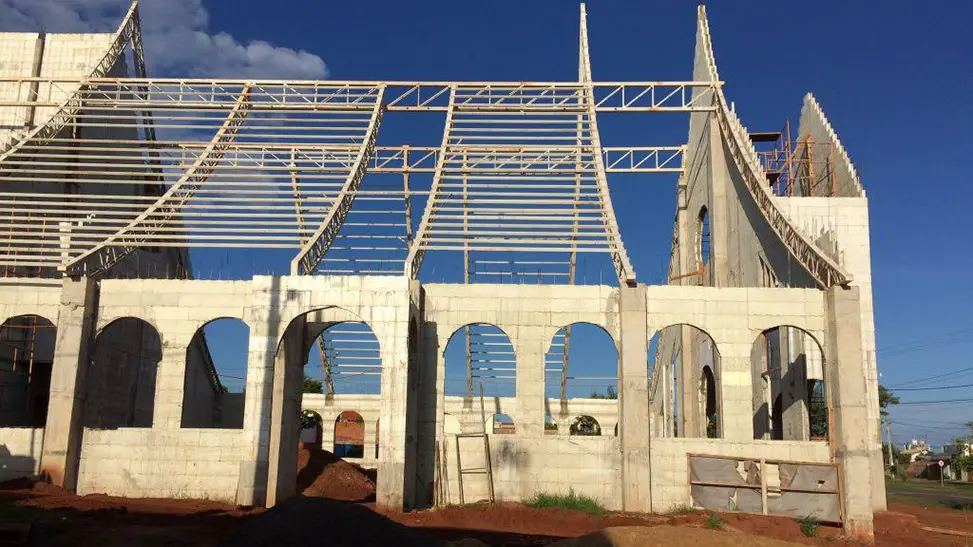
Special structures: beyond buildings
Not every differentiated structural project is a skyscraper or a shopping mall. Escritório Feitosa e Cruz also works on smaller projects, renovations and retrofits — projects that, although on a smaller scale, demand the same technical precision and structural care. These are residences, churches, smaller commercial buildings and adaptations that show that quality engineering is not measured solely by the size of the project, but by the excellence of the structural solution.
The human factor in exceptional projects
There is, however, a dimension of differentiated structural projects that goes beyond technique: the human dimension. Every structural decision affects the lives of real people.
"When you design a hospital, you know that lives will be saved in that structure. When you design a shopping mall, families will make memories there. When you design a corporate building, thousands of people will spend decades of their professional lives in that space," reflects Eng. Feitosa.
This awareness of the human impact of structural work adds a layer of responsibility that no software can calculate. And perhaps this is where the greatest difference between an ordinary structural project and a truly differentiated one lies: it is not just about overcoming a larger span or using less material — it is about creating structures that allow architecture to fulfill its ultimate purpose of serving human needs.
New materials, new challenges
The future of structural engineering is being written right now, with the introduction of new materials and construction methods. Ultra-high-performance concretes, optimized steel profiles, hybrid systems combining different materials, prefabricated structures with millimeter precision.
"The industries are bringing new materials that are completely changing the way we build," observes Eng. Feitosa. "However, the challenge for new professionals is to deeply understand the behavior of these materials, not just trust what the software says."
He mentions the importance of keeping alive the knowledge of the fundamental principles of structural engineering, even in an era of sophisticated software such as TQS. "Software is an extraordinary tool, but it needs to be used by someone who understands the laws of physics that govern structural behavior. Otherwise, we run the risk of having 'luxury data-entry operators' instead of engineers."
Invisible structures, lasting impact
Truly differentiated structural projects rarely appear in architecture magazines. They are hidden — inside the walls, beneath the floors, in invisible foundations. But they are what allow that impressive span to exist, that fluid space to be possible, that architectural transformation to materialize.
They are the invisible heroes of civil construction, working silently to ensure that architects' dreams, clients' needs and users' safety meet in perfect harmony.
And when you walk into a space and feel something special — that sense of amplitude, of lightness, of impossibility made real — you can be sure: there is a differentiated structural project there, telling its story in silence.