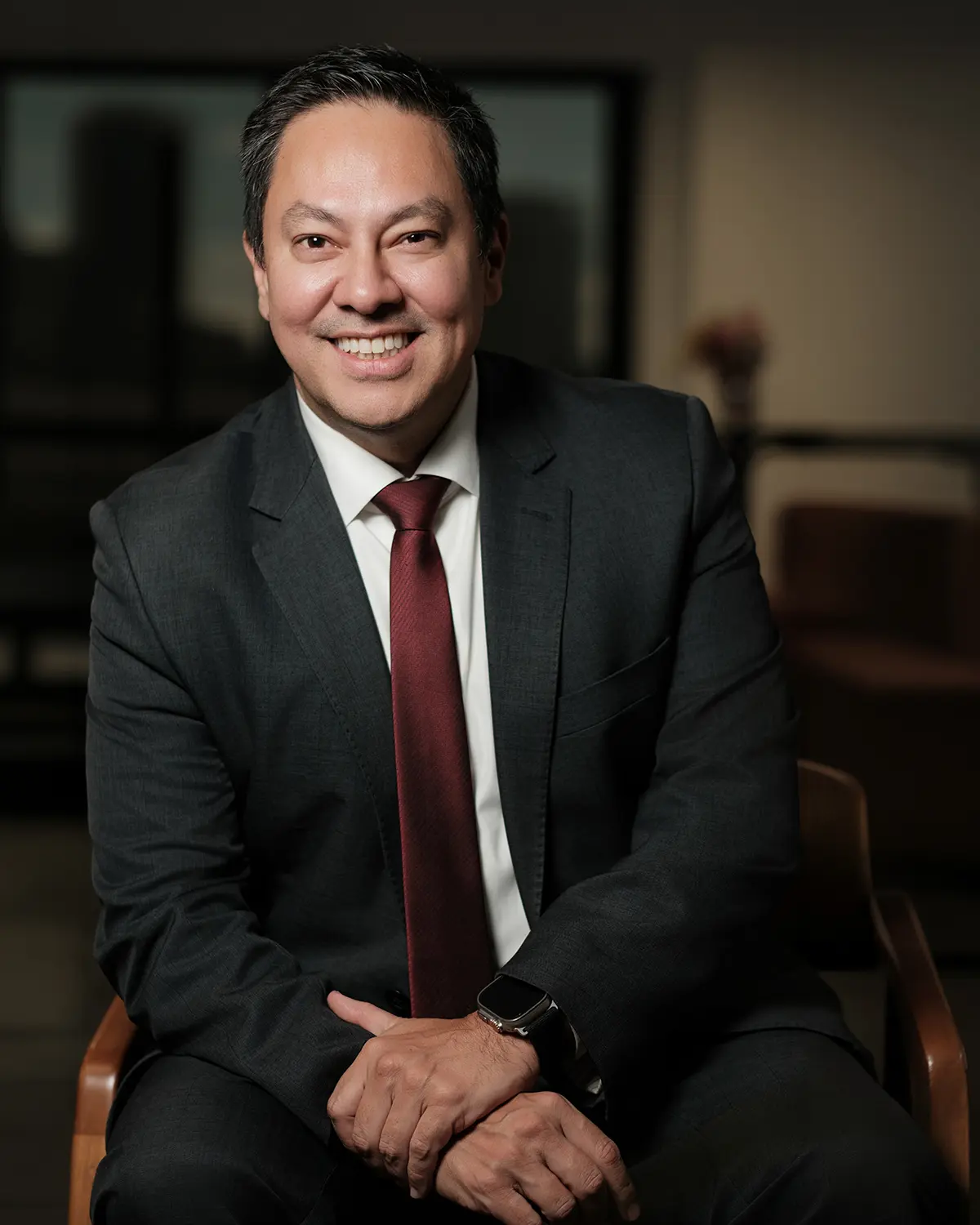
It’s 6:30 a.m. on a typical Tuesday morning, and a room in Alphaville is already bustling with activity. Coffee, handshakes, someone checking a name tag with the company name. In a few minutes, each businessperson will have their turn to speak—and someone there, in the same room, probably already knows exactly what they need.
On Wednesday, the same room hosts another group. On Thursday, yet another. In Alphaville, the OESP1 headquarters operates like this almost the entire week—a different group every day, almost always before 7 a.m., when the city is still waking up. In Osasco, the same pattern repeats at its own locations, group by group. And then there are those who don’t even need a physical space: meetings held entirely online—proof that the method adapts to the format without sacrificing schedule discipline or the rigor of its purpose. This is the most accurate portrait of what BNI OESP1 has become since Alfredo Tanimoto decided to invest in it back in 2011, when the model barely existed in Brazil. Since then, that bet has grown into a network: 10 active groups, 6 in formation, and a method that has turned business referrals into a routine, not a coincidence.
The method has a name: it’s BNI (Business Network International), now present throughout virtually the entire country, with approximately 21,000 members in Brazil alone. Since its founding in 1985, BNI has helped 2.28 million companies worldwide generate, collectively, more than $228 billion in cumulative revenue. OESP1 is neither a parallel initiative nor a loose adaptation—it is the disciplined application, in Alphaville and the surrounding region, of a methodology that has already proven to work at scale. It is this affiliation that gives the local network the weight of a tested system, not just a single good idea.
Referring others isn’t a courtesy—it’s a strategy
What sustains a meeting like this, week after week, is not camaraderie among those present—it is discipline. A discipline with nearly 42 years of track record worldwide and 17 in Brazil—enough time to prove that the method works regardless of geography or business culture. Anyone who has seen up close how a group meeting works knows that referrals there aren’t made out of politeness. Referrals are made because of trust—and that trust is built, tested, and renewed every week; it isn’t assumed with the first handshake.
It is this mechanism, more than any talk about networking, that explains why a referral within the network leads to a closed deal with a frequency that traditional “networking” could never achieve. Those attending a meeting for the first time are often surprised: it’s not a social event. It’s a business meeting, with an expected outcome at the end.
“It’s not luck to be in the right place. It’s discipline to be with the right people every week. This constant engagement is what transforms personal growth into professional growth—and it’s what separates those who stay in the network for five or ten years from those who pass through it and build nothing.” — Alfredo Tanimoto, Executive Director
Members who stay with OESP1 for five to as many as fourteen years don’t stay out of habit or social ties—they stay because they see real results and because they’ve learned to trust the people around them. It’s a statistic that few business networks can sustain: people who could leave at any moment but choose to stay, year after year, because the method continues to deliver results.
Developing leaders is part of the method
Few associate BNI with leadership development, but it is within this weekly routine that many members take their first steps as leaders. Each group is led by business owners who take on voluntary leadership roles—president, vice president, secretary-treasurer—for a fixed term, learning to coordinate people, mediate conflicts, and lead productive meetings. It’s a school of practical management, without a classroom: those who have never led a team suddenly find themselves managing the interests of twenty or thirty business owners at the same time.
This constant exposure—introducing oneself, mediating, making decisions—is also what explains why so many members report gains in confidence and clarity of communication that go far beyond networking. Learning to pitch your own company in sixty seconds, every week, is training in public speaking and positioning that few companies offer their own partners.
Positioning: Being known for what you do best
Another little-discussed effect of the method is what it does for each member’s market positioning. By presenting weekly to the same group, business owners are forced to constantly refine their message about what they do, for whom they do it, and why they—and not their competitors—should be the right choice. This forces a clarity of value proposition that many businesses never develop on their own.
Over time, each member ceases to be “just another service provider” and comes to be recognized, both within and outside the group, for the specialty they represent. It’s positioning built through practice, tested every week in front of an audience that also serves as a network of potential clients.
A headquarters that’s more than just an address
Most BNI chapters in Brazil are located in hotels, coworking spaces, or rented rooms. OESP1 has its own headquarters. In the heart of Alphaville, the space hosts weekly group meetings, leadership events, training sessions, and something that is still rare in the world of business networks: a podcast studio and multimedia production facility dedicated exclusively to giving members visibility.
It is also in this space that Alfredo Tanimoto brings to the stage figures such as the CEOs of Azul, Hagana, and CCR—not as distant institutional content, but as direct insights for those in the room: executives from large companies sharing decisions, mistakes, and strategies with the regional chapter’s members themselves, in a level of intimacy that would be unlikely outside this setting.
The magazine you hold in your hands is one of the products of this vision. So are the video content, podcasts, and event coverage that the regional chapter produces throughout the year. Alfredo Tanimoto realized early on that networking without content has a short shelf life. And that a strong regional chapter needs to produce not just referrals—it needs to foster a culture.
A Continuation, Not a Summary
BNI no longer needs to prove that the model works—the numbers and the routine of each weekly meeting already do that. What remains to be told is what this structure continues to generate: business, leadership, positioning, and a culture of collaboration. It is no coincidence that “movement” is the word chosen by the chapter to symbolize OESP1’s current moment—because that is what the method demands, week after week: people moving toward one another, rather than waiting for business to come to them on its own. This magazine serves as a record of this movement—not the beginning of the story, but the chapter in which it proves itself, in constant action, through real numbers, as we are changing the way the world does business®.