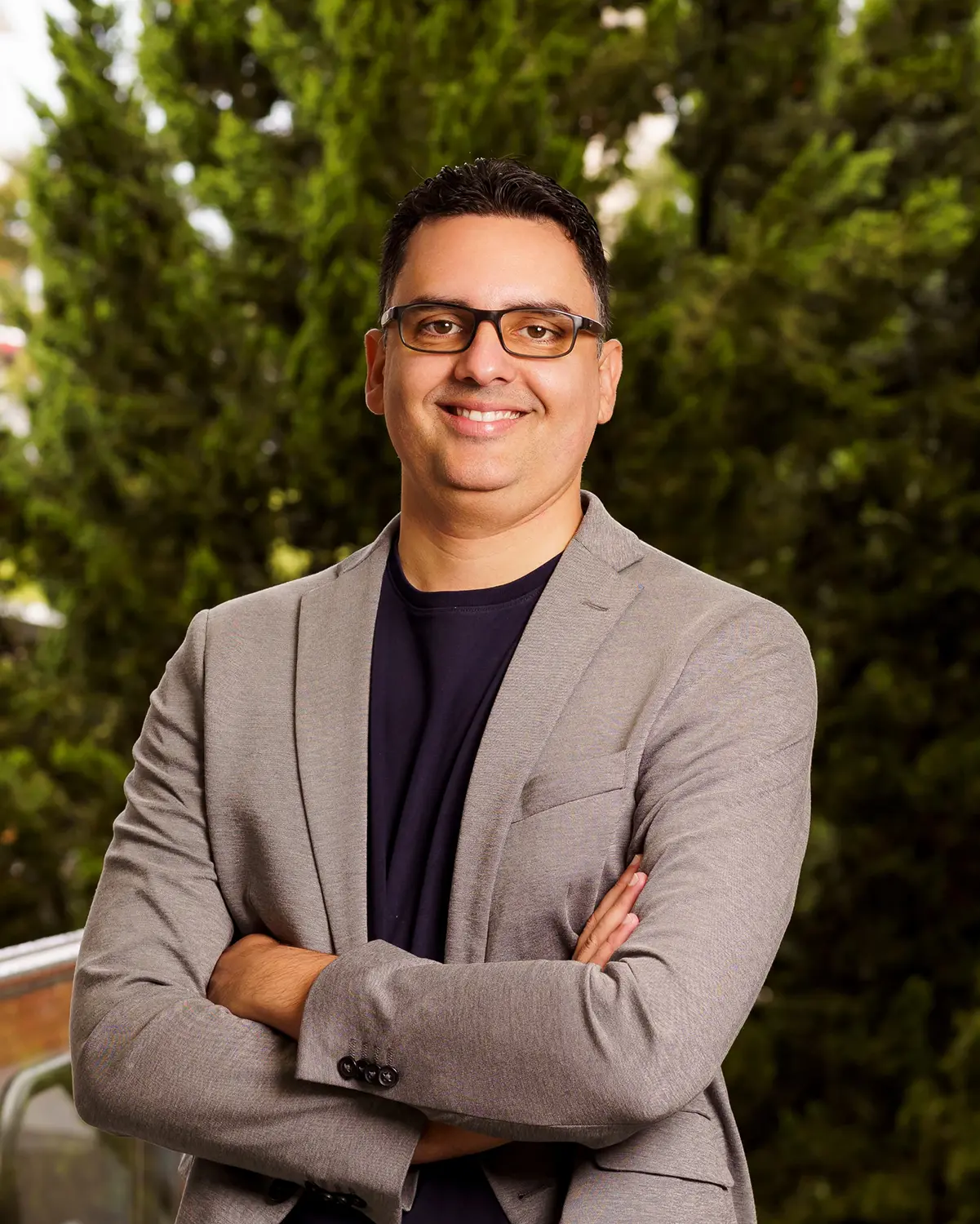
There’s a phrase Commander Ramos repeats as if he’s already tested its usefulness in real-life situations: “Focus, strength, and faith—that’s all there is to it; it’s the recipe for success.” It didn’t come from a motivational speech. It came from two times when he truly needed it—once inside a cockpit, and another within his own business, when the company he had founded nearly succumbed to the pandemic. This formula, which he himself dubbed “Triple Fox,” is the thread that ties together the entire journey ahead.
From the backyard in Pirapora to Azul’s board of directors
At age 12, in the backyard of his home in Pirapora, in the interior of Minas Gerais, Commander Ramos already knew which neighbor preferred the yellowest Galician lemons, which one rooted for the greenest Tahiti lemons, and how long, on average, a bag of twelve sold for 50 cents would last. He didn’t sell mangoes—the whole town had plenty of those. Lemons, yes: guaranteed demand, every week. “It was CRM all in my head,” he jokes today, decades before hearing the acronym for the first time in an MBA classroom.
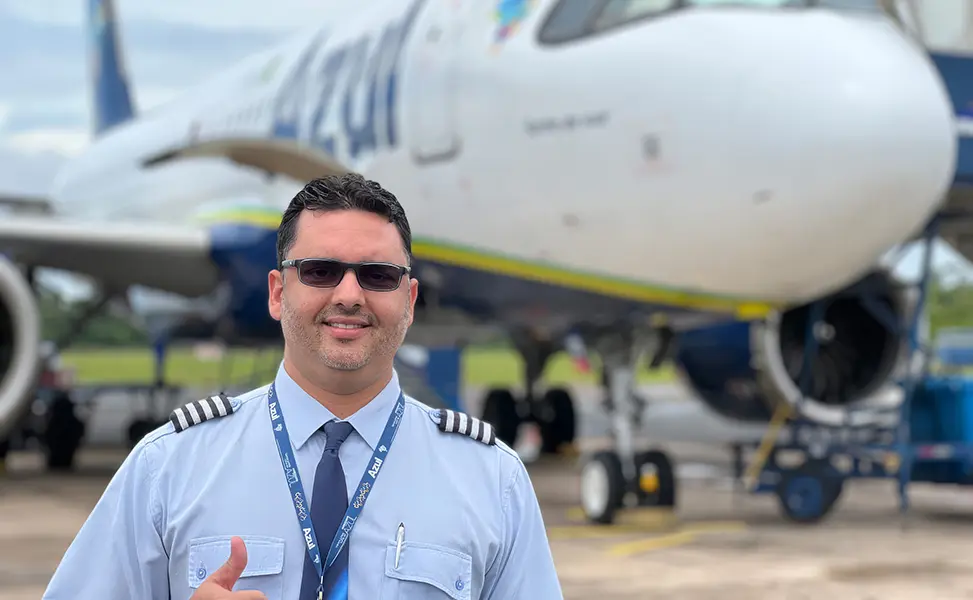
At 14, he traded lemons for the city’s airport. He washed planes, helped mechanics, and received complimentary flights in return. It was the beginning of a passion that, sixteen years later at Azul, would lead him to fly virtually the entire company’s fleet as an international captain—and, along the way, to hold half a dozen leadership positions that most pilots never get to occupy: pilot coordination, flight standards, and international route development. It was this rare combination—of someone who understands the aircraft from the inside and the spreadsheets from the top—that qualified him for the invitation that would change the second half of his career: taking over as president of Azul Conecta, which he inherited with a negative cash balance and negative net worth.
After two years of rebuilding, the numbers added up—punctuality and reliability on the rise, equity back in the black, and the unit becoming, without anyone having planned it that way, a testing ground for the rest of Azul. Tests of artificial intelligence applied to flight scheduling began there, before the topic became a mandatory agenda item on any board of directors—and what worked in the small unit was later migrated to the main operation. In 2025, with Safe growing at a pace that demanded the founder’s full attention, he handed over the presidency to someone else and remained on the board for a year to oversee the transition. Today, he continues as a technology and innovation consultant for Azul—and is on unpaid leave as a pilot, dedicating himself entirely to the company, with the expectation of flying more frequently next year. “I miss it terribly; I love flying,” he says, referring to an absence he describes as a choice, not a loss.
A school that barely weathered the pandemic
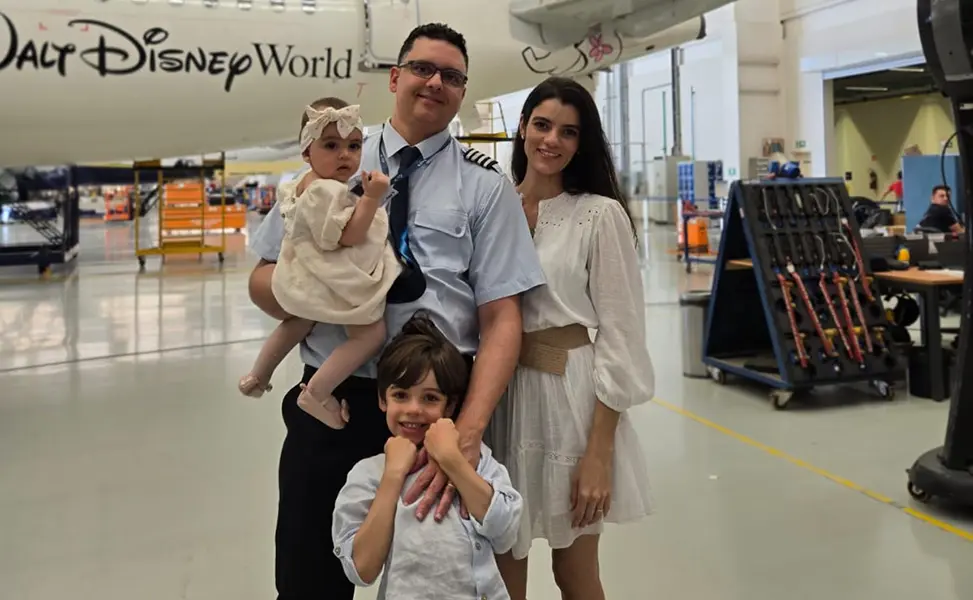
Safe was founded in 2018 from an equation that can only be pieced together after years of selecting pilots from within an airline: a personal struggle—the one he himself faced in earning his degree— a real market pain point—poor schools and subpar basic education in Brazil—and the desire to create a scholarship program for those with talent but without the money to pay for training. He earned an MBA from FGV, put together a business plan, and set out to raise one million reais for the first two airplanes. He had anticipated six months to raise the funds. He closed the deal in one. The headquarters was established in São José dos Campos, in the Paraíba Valley—a historic hub of Brazilian aviation, where, years later, the school would also open a second campus in Campinas.
A year after receiving certification from ANAC, in August 2019, the pandemic struck, and with it came the closest Safe had ever come to closing its doors. “Imagine having all the planes grounded, with no revenue, during such a challenging time,” recalls Captain Ramos, making no attempt to downplay just how painful that was. The recovery came through two avenues at the same time: internally, the decision to launch a program for hobby pilots—now 10% of the student body, with a goal of reaching 30%—a decision made, according to him, to never again put all their eggs in one basket; externally, the arrival, in late 2020, of one of the country’s leading aviation influencers as a student, drawn by the safety framework the school had maintained even during the crisis. In 2021, the turnaround in revenue led to a Series A funding round: 5% of the company was sold for 3 million reais, valuing the business at 60 million—just over a year after it nearly shut down.
Today, Safe has trained more than 500 pilots, 90% of whom are heading toward professional careers with airlines, and has become the largest supplier of pilots to the sector in the country—a result, according to him, of training pilots so well-prepared that the airlines themselves spend less on training them afterward. Expansion continues beyond major urban centers—Maricá in Rio, with Piracicaba and Americana in the interior of São Paulo under consideration—always avoiding the competition for airspace at the capital’s already saturated airports. Eighty percent of the fleet is manufactured in Brazil, a choice he treats as part of the business itself, not just rhetoric: strengthening the national aviation industry also ensures a steady supply of parts.
The coffee that taught him to listen
If there’s one episode that Commander Ramos points to as the one that most changed his leadership style, it didn’t happen in a meeting room. It happened one early morning in Porto Velho, with a 4 a.m. takeoff scheduled for Manaus—a full hour flying over the forest, with no alternate airports along the way. The previous crew had reported a smell of smoke on board. Mechanics searched the plane, found nothing, but the smell was still there, and takeoff was approaching. It was the youngest flight attendant on the team, a former perfume saleswoman, who resolved the impasse: your sense of smell becomes overwhelmed, she explained, and you start to perceive smells that no longer exist—in her old job, they solved this by having customers smell coffee between one fragrance and another. The crew sniffed some coffee, checked the air vents again, and confirmed that the smell had disappeared. The flight departed late, but without incident.
“The important thing is to listen to everyone, including the newest members,” he says—and this isn’t just a catchphrase; it’s what he puts into practice every day at Safe, insisting on listening directly to customers, without intermediaries, even when the internal team assures him that everything is fine.
It’s the same logic, he points out, that led Azul to become the only Brazilian airline voted number one in the world by TripAdvisor, ahead of Emirates, Qatar, and Etihad—a ranking decided by passengers, not experts.
How he sees the industry moving forward
Outside the company itself, his perspective on Brazilian aviation is that of an analyst, not someone putting out fires. There’s a pilot shortage in Brazil and around the world, he says, but the bottleneck is training, not motivation: half of Safe’s students drop out midway through the course, less because of technical difficulty and more because of a lack of focus among a generation unaccustomed to a training regimen that requires simulators, flight hours, and tolerance for repeated errors. The result is a paradox the country has yet to resolve: it trains pilots only to see Emirates recruit them by paying three to four times the local salary—a supplier of labor to the world, yet unable to retain professionals at home.
As for artificial intelligence replacing pilots, he dismisses the idea outright—not out of attachment to the profession, but based on risk assessment: an aircraft without a human pilot is vulnerable to system hacking, and the cost of a failure in that scenario far outweighs any efficiency gains. Even so, Safe’s fleet is already the most modern in the country, with a fully digital cockpit and comprehensive telemetry, training pilots to make decisions increasingly based on data and less and less on instinct. International expansion is the next chapter—currently held back by regulatory barriers, since ANAC does not yet administer exams in English, and by the need for at least ten additional aircraft before the school can accept foreign students in significant numbers.
In the landscape of Brazilian aviation over the coming years, his focus is on the interior: cities outside major metropolitan areas, regional routes—a trend that Azul itself is already reflecting in its expansion and that remote work is accelerating, relieving the capital of some of the pressure to live near the office.
Get up, fall down, get up again
If there’s one point Captain Ramos makes a point of emphasizing beyond what he already teaches in his lectures, it’s the second F in the formula—strength. In his view, falling is part of the journey; the problem is people’s increasing difficulty in bouncing back afterward. “Today, people are less and less resilient when it comes to getting back up after a fall—and falling is normal,” he says. This is what he observes, with increasing frequency, among new employees and students at Safe: people with clear focus and goals who give up at the first sign of frustration. He attributes his own resilience to the adversities he’s faced throughout his career—not as suffering to be flaunted, but as training. “It’s very cyclical. Some days are bad; some days are good,” he sums up.
The formula that never changes
In the end, it comes back to the same phrase from the beginning. Focus to stay on track—the same focus that separated marketable lemons from unripe mangoes decades ago. Strength to weather the setbacks and get back up—the same strength that sustained two years of rebuilding at Azul Conecta and a school on the verge of closing in the midst of the pandemic. Faith to believe it will work out—the same faith that turned one million reais raised in a month into a school valued at 60 million.
His criteria have remained the same since he was 12; what has changed is the scale of the operations to which he applies them. Today, he makes decisions about airport expansion, the digital fleet, and investment rounds—and he still decides, every day, whether a newly trained pilot is ready to fly solo.