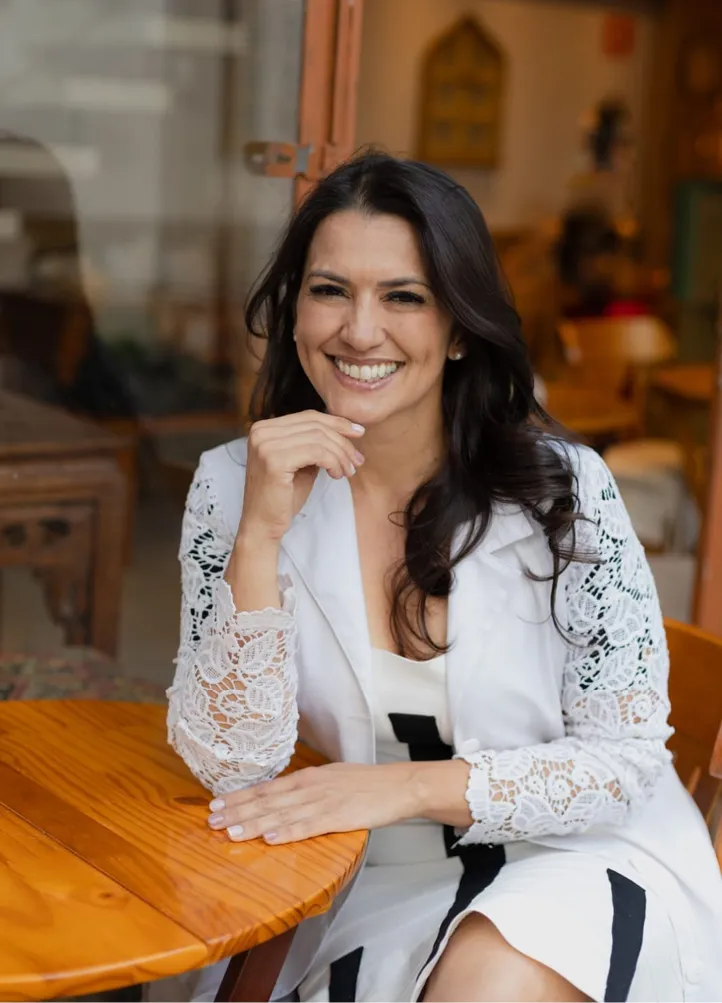
Magna Marinho de Oliveira built her entire life around a simple principle: bringing health and quality of life to people. A physical therapist, nutritionist and cognitive-behavioral therapist, she spent more than 25 years dedicating her expertise to patients who, often, no longer knew where to turn for help. When she lost her mother, her father and her husband within just a few years, she still didn't stop — she took her pain and turned it into a purpose: to discover the root causes of illness rather than merely relieving symptoms. She opened a clinic — Reinicie, in Alphaville — raised her children on her own and kept being the shoulder everyone leaned on. Asking for help simply wasn't part of her story.
In April 2025, a subtle weakness in her left hand changed everything. As a physical therapist, Magna quickly suspected something muscular — perhaps arthritis, perhaps a contracture. She treated herself. When the symptoms persisted, she saw an orthopedic specialist. Electroneuromyography revealed atrophy in more than two nerves in her left hand, with deterioration already reaching her right hand. The speed of progression alarmed the specialists. Within days, Magna was admitted to Hospital das Clínicas in São Paulo, surrounded by eleven doctors. The diagnosis was Amyotrophic Lateral Sclerosis — ALS — with a prognosis of three to five years.
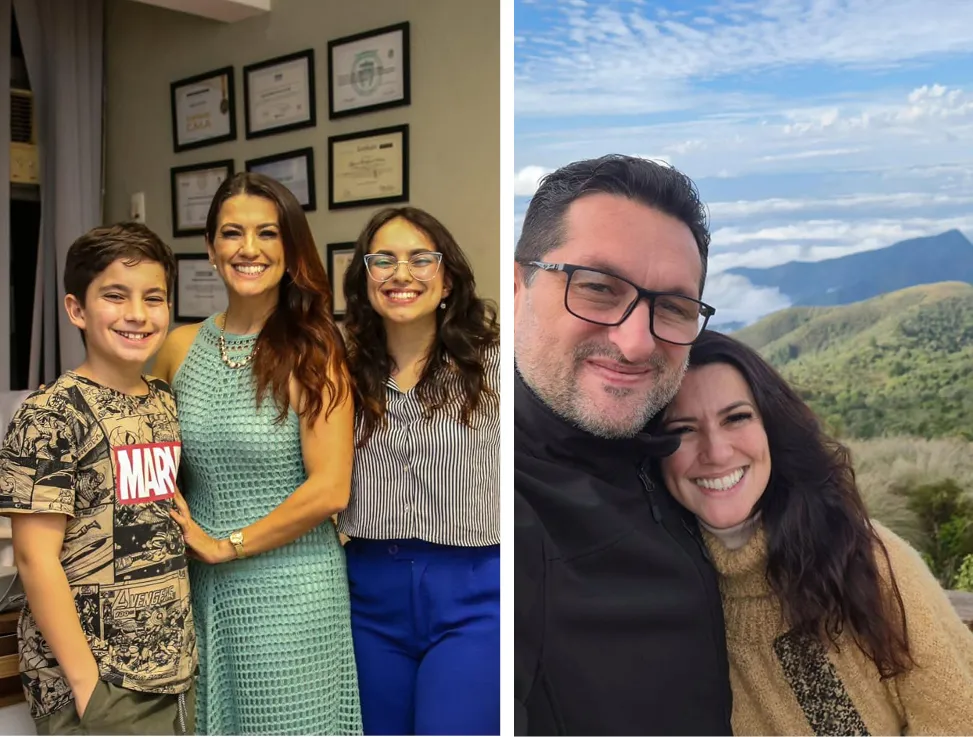
She was alone in the room when she received the news. Conventional medicine offered no treatment — only palliative care to slow the disease's progression. The word progressive echoed. Yet Magna knew the integrative medicine world well, and her motto had always been: you are not a prisoner of your diagnosis. She wasn't.
The moment the community revealed itself
A member of BNI Alphaville for several years, Magna made the decision she felt was unavoidable: to tell the group she would need to step back. Her membership renewal was approaching, resources were needed for treatment, and she didn't want to depend on anyone. The group's response, however, was not a protocol embrace — it was a mobilization.
Member Fabiana Santiago, who had already become a close friend, was the first to reach out and offer help. She listened to the diagnosis, understood the treatment possibilities — including a protocol in the United States costing $27,000 per session — and brought the situation to executive director Alfredo Tanimoto. The next day, Alfredo was at Magna's office. He arrived in pain himself, but that didn't stop him. He stayed for two and a half hours. He talked. He listened. And he organized a raffle that mobilized the entire group.
The campaign raised enough resources to fund treatment for her dental arch — an integrative approach that investigated the origin of the disease through infectious foci associated with a virus capable of crossing the blood-brain barrier and attacking motor neurons. To stock the raffle, group members donated products and services: a pearl necklace from MRS Golden Store by Anderson de Oliveira; an electric motorcycle from member Simone Baptista; a landing page from Alef Design + Editora; autographed team jerseys, among other items that reflected the community's generosity. Later, a second initiative — the Cigar Night raffle — made possible the treatment in Brasília, where Magna continues her recovery.
What moved Magna most, however, were not the numbers. It was the invisible gestures: members who bought 1, 20, 30 raffle tickets without saying a word, whose names only surfaced much later; the private messages; the friends — from the group — who became sisters without planning it. And Alfredo, whom she describes with a simplicity that says it all: an extraordinary human being.
A lesson she never expected to learn
Magna has no difficulty identifying what transformed her most through this process — and it wasn't the treatment. It was learning to receive, to accept help. She, who for eight years raised her children alone, who worked twelve hours a day six days a week, who treated patients for free when they needed it, discovered that pride comes at a high price. And that accepting care is not weakness.
In March 2026, when she returned to Hospital das Clínicas for reassessment, the doctors encountered something they rarely see with ALS: improvement in muscle strength tests. Her left hand, which scored 12 points in November, reached 18. Her right hand went from 17 to 30. The physical therapist called her name three times in the waiting room — not imagining she was right there, in heels, with no symptoms in her legs. "But isn't your diagnosis ALS?" "Yes. And you're wearing heels? You weren't even supposed to be standing."
Medicine still doesn't know what to expect from her in the coming months. Magna does. She continues with integrative treatments, managing her diet, strengthening what can still be strengthened. And in June 2026, she is getting married to the man who, upon learning of her diagnosis, did not run from the responsibility — he proved to be the partner she had always been looking for, someone to grow with.
Much more than networking
Magna sums up BNI Alphaville with a phrase that leaves no room for interpretation:
"What God gave me was not a networking group. It was a family to call my own, one that made me better than I was."
She is no longer an active member of the group at this moment — she is in Brasília, taking care of herself, something that took decades to learn. But her daughter continued in Santana de Parnaíba for university, and Magna promises to always visit BNI. Not out of obligation. Because family is like that: you want them close.
For those who still see BNI only as a business tool, Magna's story offers a different perspective. Real communities don't emerge from contracts or referral spreadsheets. They emerge in the moments when someone shows up — even in pain, even without knowing exactly what to say — and simply stays.