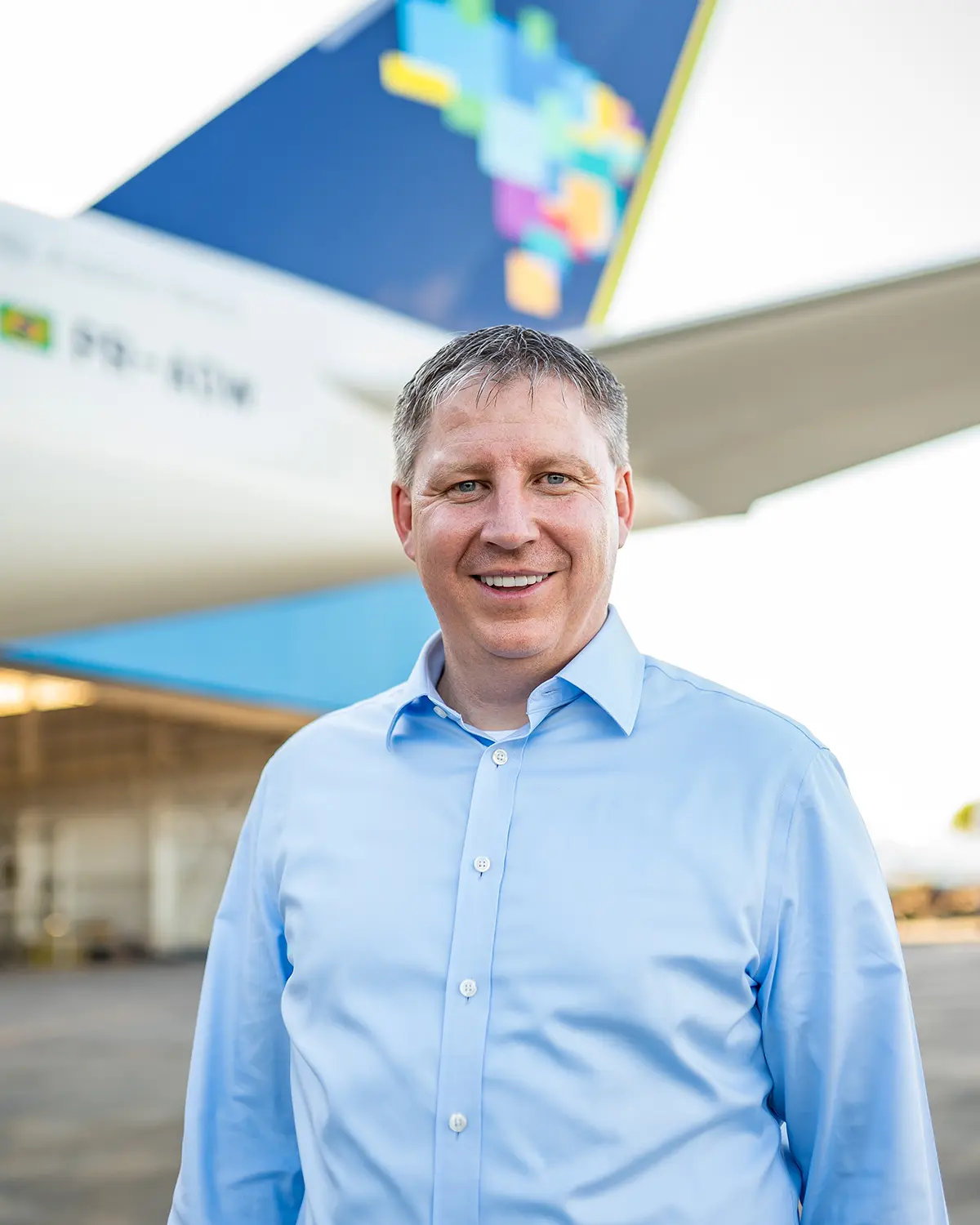
In March 2025, BNI hosted one of the country's most admired executives for a lecture that, even before it began, had already sold out every available seat. John Rodgerson, CEO of Azul Linhas Aéreas, shared with entrepreneurs his journey of nearly two decades in Brazil and the principles that turned an aviation startup into the holder of one-third of the world's fifth-largest aviation market and the position of the largest airline in Brazil by number of destinations served.
It was not just another corporate lecture. It was a meeting between visions that complement each other: BNI's "Givers Gain" philosophy and the values John implemented at Azul from day one. Both understand that true business is built on genuine relationships, trust earned through consistency, and the courage to put people before processes.
During the conversation, it became evident why Azul has won not only market share, but hearts. John does not speak like a CEO distant from reality — he speaks like someone who personally serves customers, who apologizes when something goes wrong, who knows the employees, who, by the way, are all called Crew members at the company, by name, and calls them when they have a baby or lose a loved one.
The values he defends — safety, consideration, integrity, excellence, innovation and passion — are not words on a wall. They are the foundation of every decision, every interaction, every relationship built over these years. And that is exactly what BNI's entrepreneurs came to hear: how to build companies that grow without losing their soul.
The Brazil that Brazilians do not see
When he arrived in Brazil in 2008, with the Real at 1.58 and GDP growing strongly, John saw what few could see: a huge country being treated like three cities.
"I came to do something different. Nobody was flying on aircraft manufactured in Brazil. And we faced a duopoly that controlled 95% of the market, he says. But I always looked at the country as a big Brazil. My competitors? To this day, 92% of their seats only touch Rio, São Paulo and Brasília. At Azul, it is 35%."
The strategy was bold: to build an air network connecting the interior — Campinas, Minas Gerais, Pernambuco. "There are several Brazils. The Brazil of the South, of Faria Lima, of Agribusiness. And many Brazilians want to go to the United States or Lisbon. So I think: in what country do you build something from scratch and conquer a third of the world's fifth-largest aviation market?"
He pauses. "I want Brazilians to believe more in their own country. Is it complicated to do business here? It is. However, if you understand it well, the opportunities are enormous."

The most important lesson: relationship first
John remembers a dinner in São Paulo with a bank, in the early days of Azul. He was negotiating during the meal when Pedro Janot, then president and a Brazilian, scolded him in the car: "Stop talking about business during dinner."
"I said: 'What do you mean? I am not friends with the bank.' And he replied: 'Here you first build the relationship, then you do business.'"
That lesson changed everything. "In the United States it is very direct. Here, Brazilians want to trust you, to like your brand. Minas Gerais, for example — we are the biggest airline there, but it took time. They are suspicious. Over time, the relationship consolidates."
The fact of flying Embraer aircraft from the start helped. "It was a statement: we believe in Brazil."
Pandemic: the definitive test
When I ask which story marked him the most, John does not hesitate: "The pandemic. We learned that our greatest asset is our people."
Of the 13,500 employees at the time, 12,716 voluntarily took unpaid leave. "We only had expenses going out, no income coming in. Worse: we were refunding money from canceled tickets. Our people united to protect and save the company."
Why did Azul receive this support and competitors did not? "Because of the way we treat people from day one. Every new crew member is welcomed by the president. We talk about culture. And these are not just words."
Rio Grande do Sul was another example. "It was 10% of our revenue that turned to zero. But our people did not think about that. They thought about the brothers who were there. We were the first airline to fly carrying donations: water, medicine, furniture. Our own people donating time and resources."
He leans forward. "You do not have floods every day, you do not have a pandemic every day. However, the way you treat your people in the basics, in the day-to-day, makes people come together in difficult times."
Values, not rules
The story that best illustrates Azul's culture happened even before the company existed. John arrived 50 minutes early for a competitor's flight. "You cannot board. That is our rule."
"Many companies give rules. We give values: safety, consideration, integrity, excellence, innovation and passion. If you can be flexible and help the customer, do it."
The example: a humble passenger from the Northeast with five suitcases. "The rule is to charge. But we know he does not have the money. Someone based on values thinks: 'It is the right thing to do. If the owner were here, he would do the same.'"
Giving power to the front line in service creates magic. The stories arrive every day: an employee doing makeup on a passenger late for a wedding. A captain calming nervous customers angry about a delay due to maintenance. "You do not teach that.
You inspire that."
Small entrepreneurs, big future
When I ask about the program for small and medium-sized entrepreneurs that he mentioned in the lecture, his eyes light up.
"We treat Vale, Petrobras and Itaú very well. But most of the jobs come from small entrepreneurs. And a differentiated fare, a discount for them, is much more relevant than for a large company."
And are there solutions? Azul's credit card in partnership with Itaú is an example. "Every purchase, 10% off. I do not give that to Petrobras. But an entrepreneur can have it, accumulate points buying for themselves and their employees."
He gestures with passion. "Brazil has the big players and a lot of small and medium-sized companies. We need to build a bridge. Because these small companies provide jobs for my customers. That is how Brazil moves forward."
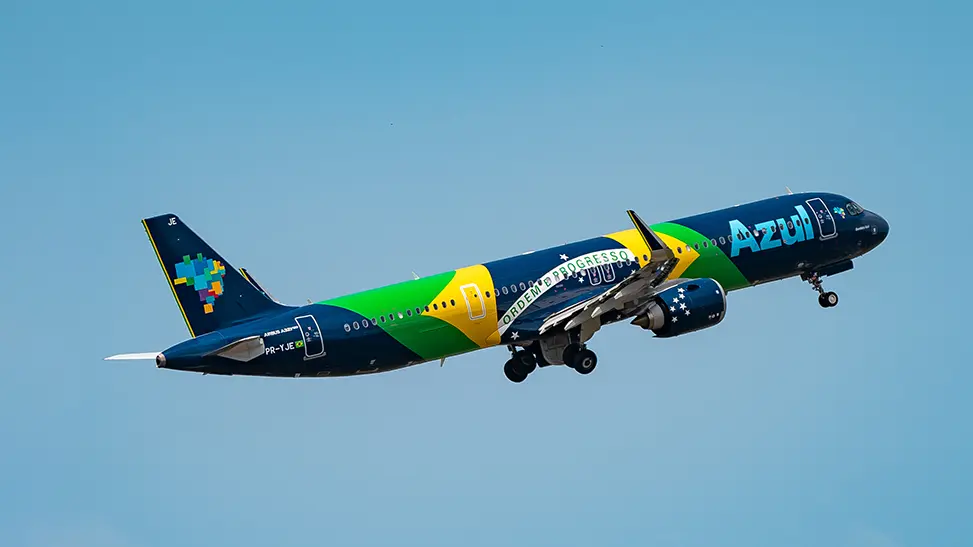
AI to bring closer, never to distance
On artificial intelligence, John is categorical: "AI is to get closer to the customer, not to make it impersonal."
He explains: "I have 15,000 crew members. When a WhatsApp message comes in, AI can help me: 'Hey, John, you called Isa when she had her baby.' I want it to be personal, not cold."
Even at the call center. "Imagine: 'Fernanda, first I want to apologize. I know your flight from Curitiba was an hour late.' It does not get impersonal. That is what AI should do."
He cites Netflix as an example of AI well used. "But today I see companies using AI to manipulate, to drive people where they want. We want to bring the customer closer. It is completely different."
Advice for himself
"What would I say to the John of 2008? Do not get so angry about small things. I was very young, very nervous. The world is small. People you worked with 20 years ago, you will work with them again."
He smiles with pride. "I was vice president of finance, I became president. Five guys who worked with me became CFOs, here or at other companies. Watching people's progress is really cool."
And for the John of 2030? He laughs. "I have no idea. I have no idea."
Family and company: no separation
On balancing personal and professional life, John is straightforward: "Many people think there is a balance. I do not think there is."
"They call on Saturday, Sunday, at night. But I can also talk to my wife during the day. I have a son in the United States, I speak to him at any time. Everyone here knows my family. My family knows everyone. We are part of one big family. There is not one life inside Azul and another outside. It is all mixed together. You are who you are."
Legacy under construction
Because in the end, Azul's story is not about aviation. It is about believing in Brazil when few believed. About building relationships when the rule was to give orders. About giving power to the front line when the norm was to control everything from the top.
It is about 12,716 people giving up their salary to save the company that welcomed them. About employees flying donations to Rio Grande do Sul. About an attendant doing makeup on a passenger running late.
These are the little magics that happen when you lead with values instead of rules. When you inspire instead of forcing. When you believe that people, if treated with consideration and trust, will always do the right thing.
And maybe that is why the lecture sold out. In a world of inaccessible CEOs and impersonal companies, John Rodgerson proves that you can grow without losing your soul. That you can have 15,000 employees and still call them when they have babies. That you can win a third of a huge market and still treat every customer as family.
After nearly 20 years, with 32 million passengers transported per year, Azul is not just an airline. It is living proof that when you believe in people and in the country, extraordinary things happen.
And Brazil, as John insists on saying, is much bigger than the Rio-São Paulo-Brasília triangle. You just have to have the courage to fly farther.